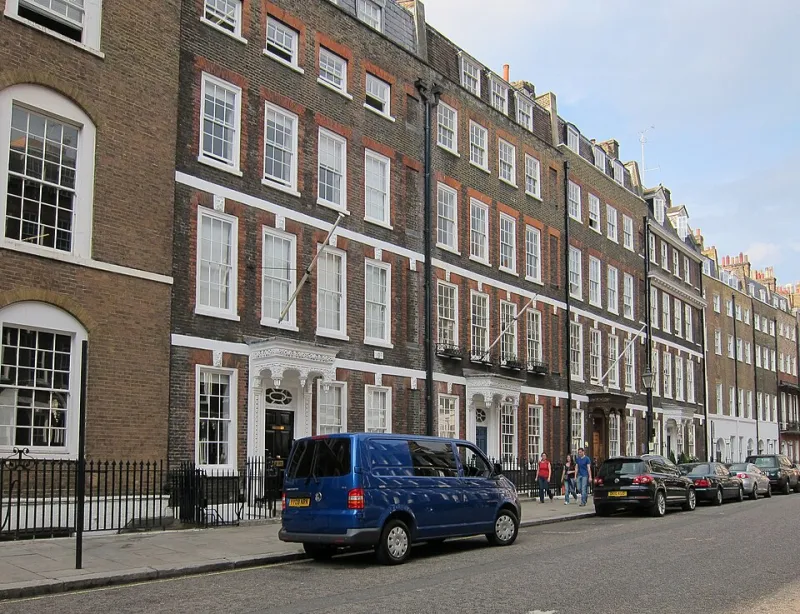
Walls That Work: How Britain's Families Are Turning Country Estates into Generational Strongholds
Photo: Dmytro Petishkin, CC BY 4.0, via Wikimedia Commons
The Estate You Will Never See Advertised
There is a particular kind of property in Britain that never reaches the portals. No listing on Rightmove, no glossy spread in a country-life magazine, no discreet card in a Mayfair estate agent's window. These are the estates that change hands the way paintings do — privately, quietly, and almost always within a structure rather than to a person.
The market for what might be called the family fortress is thriving. Agricultural land values across much of England have proven remarkably resilient over the past two decades, and the estates built upon them — the listed hall, the lodge, the tenant farms, the woodlands — have become something more interesting than homes. They have become vehicles.
Why Land Behaves Differently in a Portfolio
The appeal begins with a tax framework that treats productive land generously. Agricultural Property Relief can remove the vast majority of an estate's value from inheritance tax exposure, provided the land is agricultural in character and has been held for the qualifying period. For families with seven- or eight-figure estates, this single feature can transform a country property from a running cost into the cornerstone of succession planning.
But the relief is only the opening chapter. Landed estates offer something capital markets cannot: illiquidity as a discipline. A share portfolio can be dismantled in an afternoon. An estate cannot. The land forces the family to take the long view, and the long view is precisely where generational wealth survives or dies.
There is also the matter of income. Farmland rents, grazing licences, shooting rights, commercial woodland, residential tenancies and increasingly renewable leases — solar arrays on south-facing slopes have become a genuine revenue line — give a well-run estate a blended income that has little correlation with the FTSE.
The Trust-Owned Country House
The structural heart of the modern fortress is usually a trust. The pattern is familiar to anyone who has studied the great estates: the freehold sits in a family trust, often with the older generation as life tenants and the next generation as remainder beneficiaries. The house is lived in, but it is not owned in any personal sense. It cannot be counted in a divorce settlement, claimed by creditors, or swept into a probate process that invites scrutiny.
What has changed in recent years is who is doing this. Trust-owned country property was once the preserve of families who had held land since before the Reform Act. Today's buyers are self-made — founders who exited a business at fifty, financiers, and professionals who built substantial wealth in a single lifetime. They are buying into the structure because it solves problems they can already foresee: the second marriage, the spendthrift nephew, the care-home fee assessment, the eventual sale that would otherwise trigger a punishing capital gains event.
What the First-Time Estate Buyer Should Weigh
For families approaching their first estate purchase, the romance of the parkland photograph is the least important element. The diligence that matters is structural.
Qualify the relief before you buy. Not all land qualifies, and not all qualifying land qualifies fully. Houses with extensive gardens, land let on non-agricultural terms, or property held in the wrong vehicle can fail the tests. Take specialist advice before exchange, not after.
Understand the running arithmetic. A listed house of any scale consumes money at a rate that surprises even experienced buyers. Roof, boiler, staff, insurance, and the endless maintenance of a hundred acres of garden. The estate should be underwritten by income or by genuine wealth elsewhere — never by hope.
Buy the structure, not just the soil. The strongest purchases come with existing tenancies, sporting rights, woodland management plans and clean title. The weakest come with boundary disputes, overage clauses and a history of piecemeal sales.
Consider the family constitution. An estate held in trust requires governance. Who decides when the roof needs replacing? Who may live there, and on what terms? The families who make this work tend to write it down — the same instinct behind the rise of written family pacts.
A Fortress, Not a Museum
The finest irony of the modern estate is that its most valuable feature is not the tax relief at all. It is the anchoring effect. Children who grow up with a place — a real, shared, governed place — tend to stay connected to the family's wider wealth. The estate becomes the reason the annual meeting happens, the reason the trust is reviewed, the reason the next generation learns what stewardship means.
The great estates of Britain survived not because their owners were clever with reliefs, but because the land gave every generation a role. The modern buyers understand this. The property in the window is a house. The property that never appears in one is a fortress.