The Handshake Still Pays: Why Relationship Banking Refuses to Die in Britain

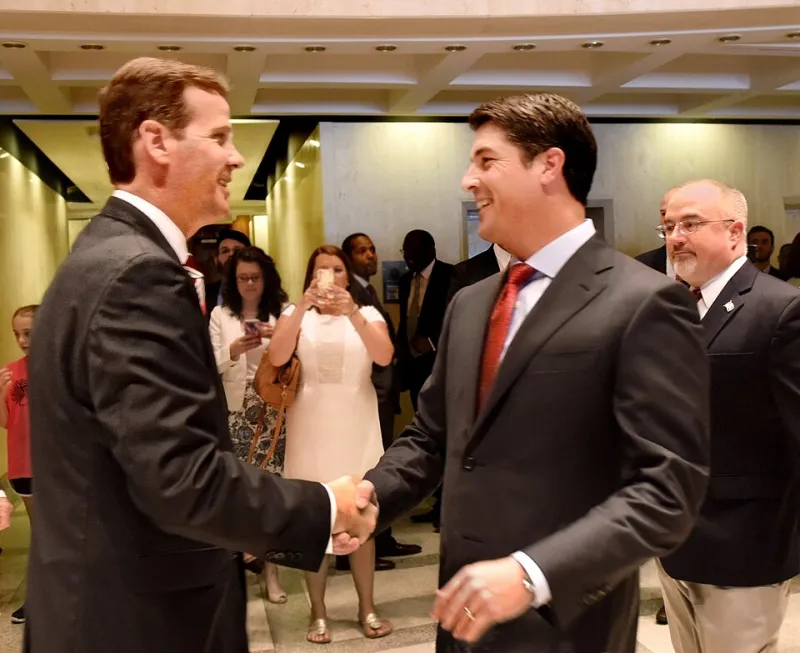
Photo: business handshake luxury office London bankers, via img.freepik.com
There is a moment familiar to nearly every high-net-worth client in Britain: a deal is moving, the clock is running, and the High Street lender needs three weeks to review a file that a private banker could clear by Thursday lunchtime. It is in moments like these that the relationship — cultivated over years of dinners, referrals and Christmas cards — quietly reveals its worth.
The digital revolution has transformed retail banking beyond recognition. Yet at the upper end of the market, the old architecture persists, and for good reason. Understanding where the handshake genuinely adds value, and where it merely adds cost, has become a discipline in its own right.
What the Relationship Actually Buys
Strip away the sentiment and the advantages of relationship banking are concrete. The first is speed. A private bank that knows a client's structure — the trust, the family investment company, the carried interest that arrives in lumps — can underwrite the person as much as the transaction. Credit decisions that take a challenger bank six weeks can take a private bank six days, because the due diligence was largely done years ago.
The second is pricing. Preferential lending margins, reduced arrangement fees and concessionary FX spreads are rarely advertised; they are granted. A client who moves £2 million of custody assets to a bank ahead of a borrowing requirement is not being sentimental. They are making a trade, and a well-advised one knows precisely what the trade should return.
The third — and least replicable — is access. Off-market property introduced before it reaches the portals. A allocation in an oversubscribed bond. An introduction to a specialist lender who will lend against an unusual asset. These opportunities circulate through networks, not apps.
When the Handshake Is Theatre
None of this means every relationship manager earns their keep. The industry has its share of what one Mayfair adviser bluntly calls 'expensive hospitality' — lunches, box seats and a quarterly review meeting that produces no measurable outcome beyond the restaurant bill.
The test is simple enough to apply. Has the relationship produced anything in the past twenty-four months that you could not have obtained transactionally? A rate improvement, a waived fee, an introduction, a decision made against the letter of the credit policy? If the honest answer is no, the client is paying for theatre — often at the cost of 50 to 100 basis points in forgone yield or higher borrowing margins.
There is also a structural point. Relationship banking works best when the banker has discretion. As compliance regimes have tightened, discretion has narrowed. Some private banks now operate credit committees indistinguishable from their mass-market siblings, with the relationship serving chiefly to accelerate — not override — the process. Clients should ask directly: what can you actually do for me that the system cannot?
How to Build a Relationship That Pays
For those entering this world, the mechanics matter. Concentrate rather than disperse. A client whose banking, lending and custody sit with one institution is a client worth fighting for internally; a client with five fragmented relationships is nobody's priority.
Second, give the relationship something to work with. Bankers fight hardest for clients who are transparent about their plans — the exit in three years, the property purchase next spring, the liquidity event on the horizon. Surprises are the enemy of discretion.
Third, review the arrangement annually with the same rigour applied to any investment. What did the relationship deliver, measured in basis points? What would the alternative cost? Sentiment has no place on a balance sheet.
The Verdict
The handshake has not died in British private banking — it has simply become accountable. For clients with complexity, timing pressure or appetite for off-market opportunity, a genuine relationship remains one of the highest-returning assets available, even if it never appears on the statement. For everyone else, the algorithm will do, and at a fraction of the price.
The discerning client's task is not to choose between the two, but to know — precisely and honestly — which one they are currently paying for.